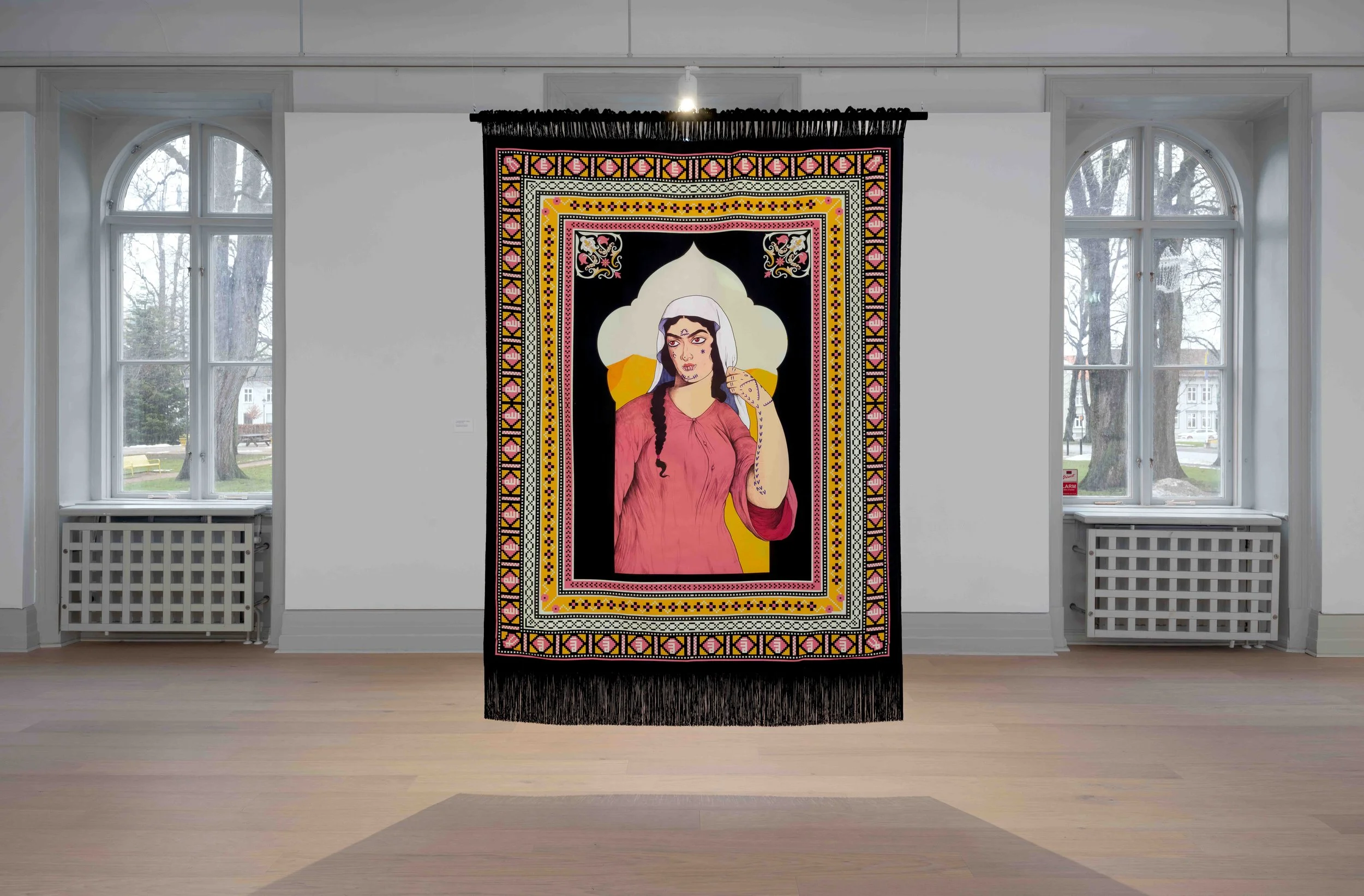
Great-grandmother’s Tattoos, 2026, Vänersborg’s konsthall, © Hendrik Zeitler
Project: Great-grandmother’’s Tattoos, 2011 - ongoing
The Great Grandmother’s Tattoos is an ongoing multidisciplinary project based on a photograph I took of my great-grandmother in Raqqa in 2011. It is the only surviving image I have of a relative from my clan wearing traditional tattoos connected to Shawaya communities of the Euphrates region.
Through weaving, textile, drawing, installation, painting, and pattern making, I work with a tattoo tradition that was never fully documented and now survives through photographs, oral histories, memories, and partial traces.
Drawing on Saidiya Hartman’s concept of critical fabulation, the project combines archival research with speculation. I do not attempt to reconstruct these traditions as fixed historical objects. I deconstruct their visual languages through repetition, enlargement, abstraction, mirroring, and translation across materials.
A central question is what these practices might have become if their development had continued into the present. How might tattoo patterns, weaving traditions, and other visual languages from the Euphrates have developed if the communities carrying them had access to digital looms, computer-based drawing, contemporary production technologies, and new materials?
The works emerge from this speculative space. Historical references become starting points for imagining possible continuations of traditions whose development was interrupted by displacement, political violence, religious repression, and social change.
The project considers these traditions not only as traces of what has been lost, but as unfinished possibilities that can still be reimagined through contemporary artistic practice.
All photos are by Hendrik Zeitler.

Great-grandmother's portrait at age 102, taken by me in 2011, days before ISIS seized Raqqa city.


Great-grandmother’’s Tattoos, 2024
91 x 76 cm
Digital illustration
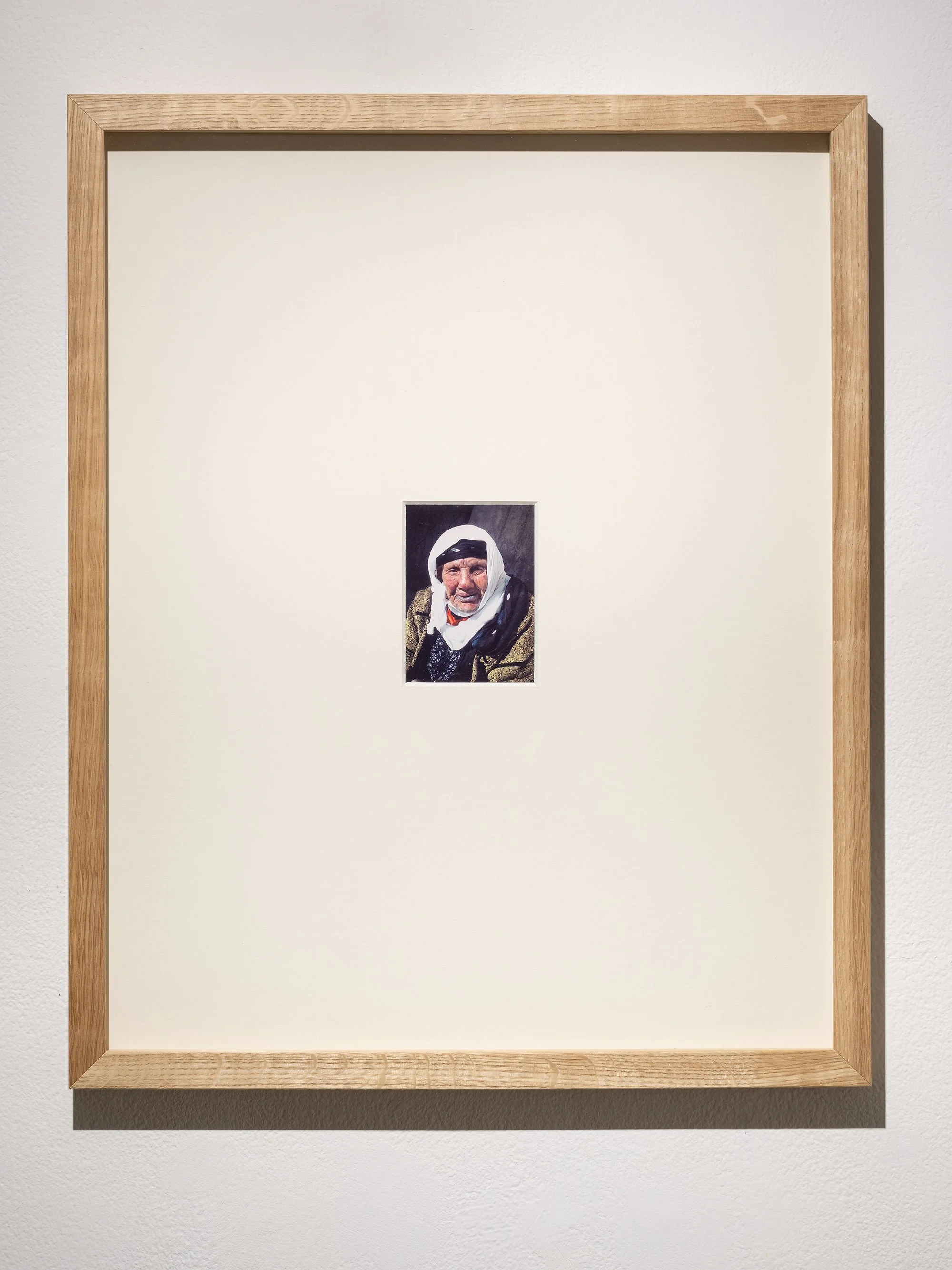
Great-grandmother's portrait at age 102, taken by me in 2011, days before ISIS seized Raqqa city.
9 × 7 cm
Digital print on paper
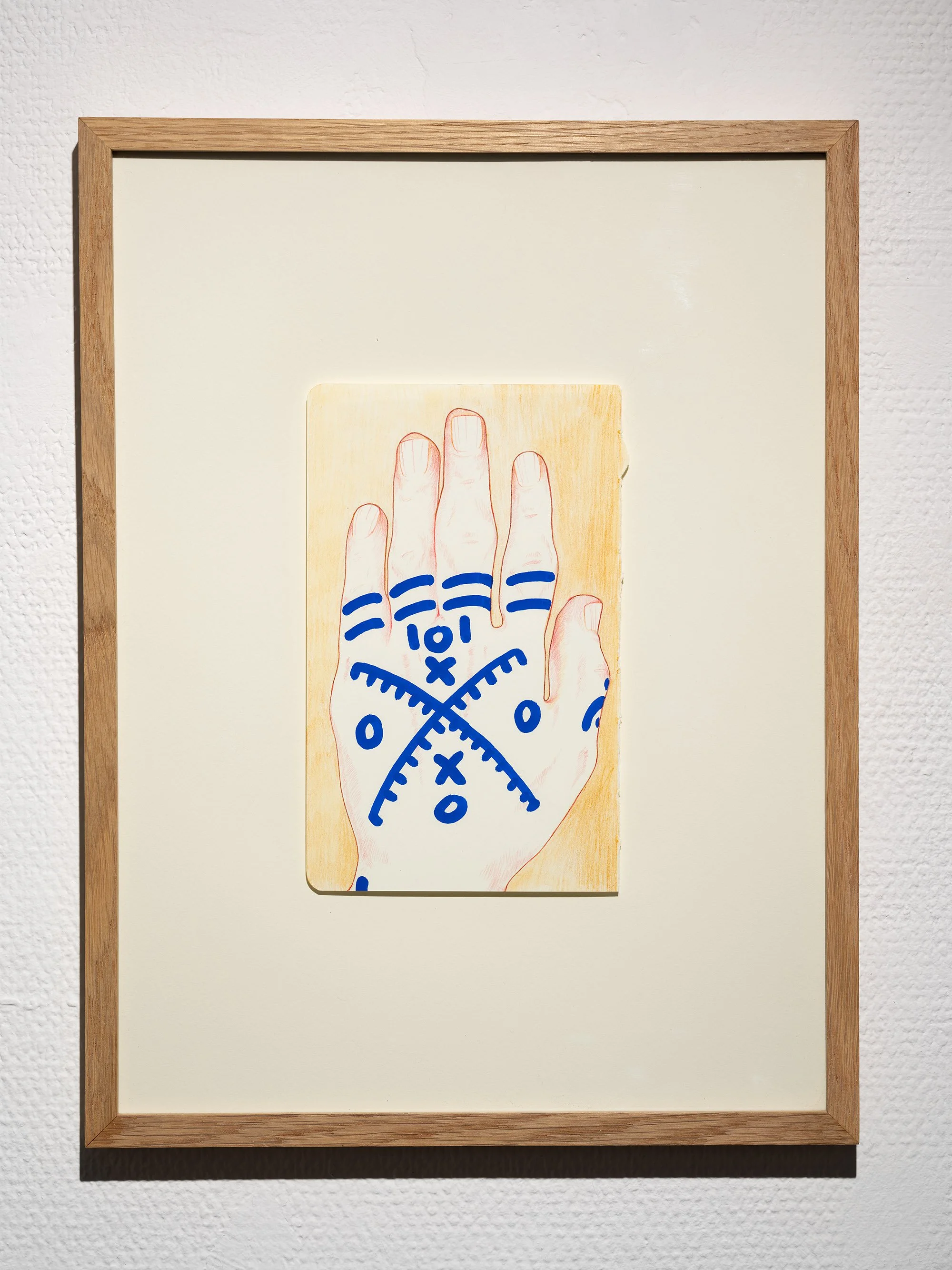
21.0 x 29.7 cm
Colored pencils on paper

Hand tattoos from the tribes and clans within my region of northern Syria.
Digital illustration
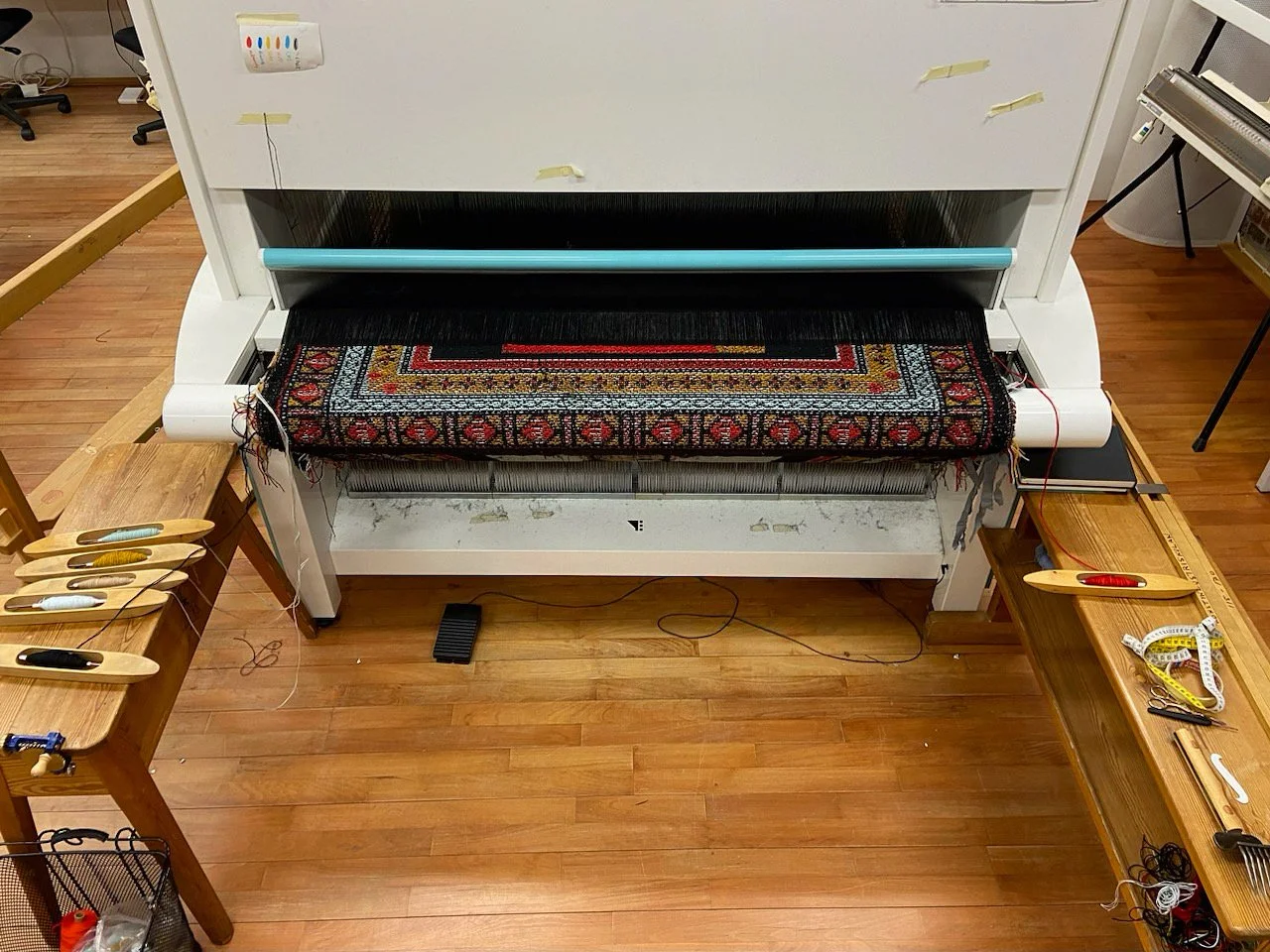
The weaving process was also developed in collaboration with textile artist Zam Stork, using a digital weaving machine that must be programmed through specialized software and a pattern system.
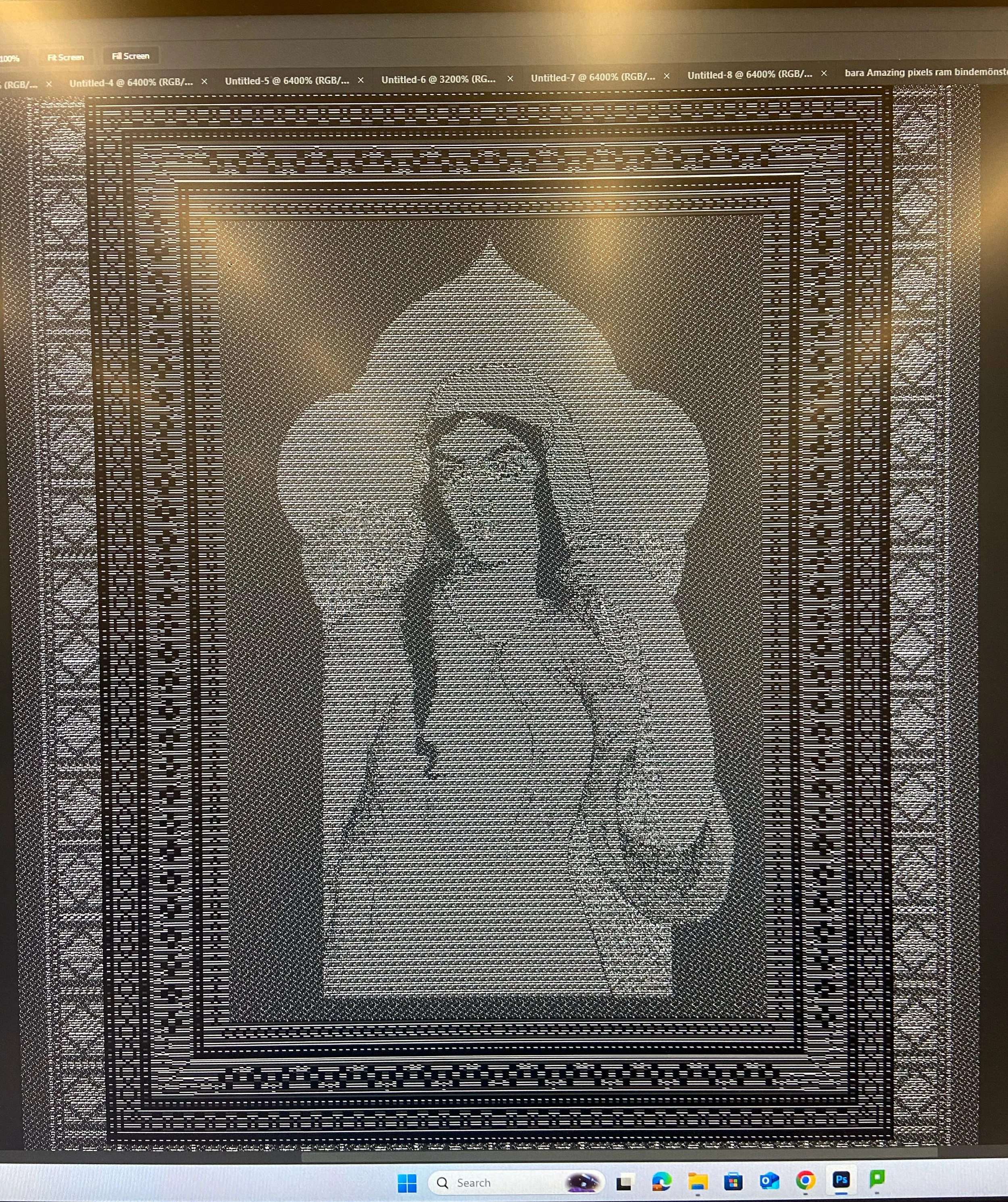
The process also included developing the seven color weave structure, translating the carpet illustration into a textile format, and adapting the image so it could be realized through a seven color weaving pattern.
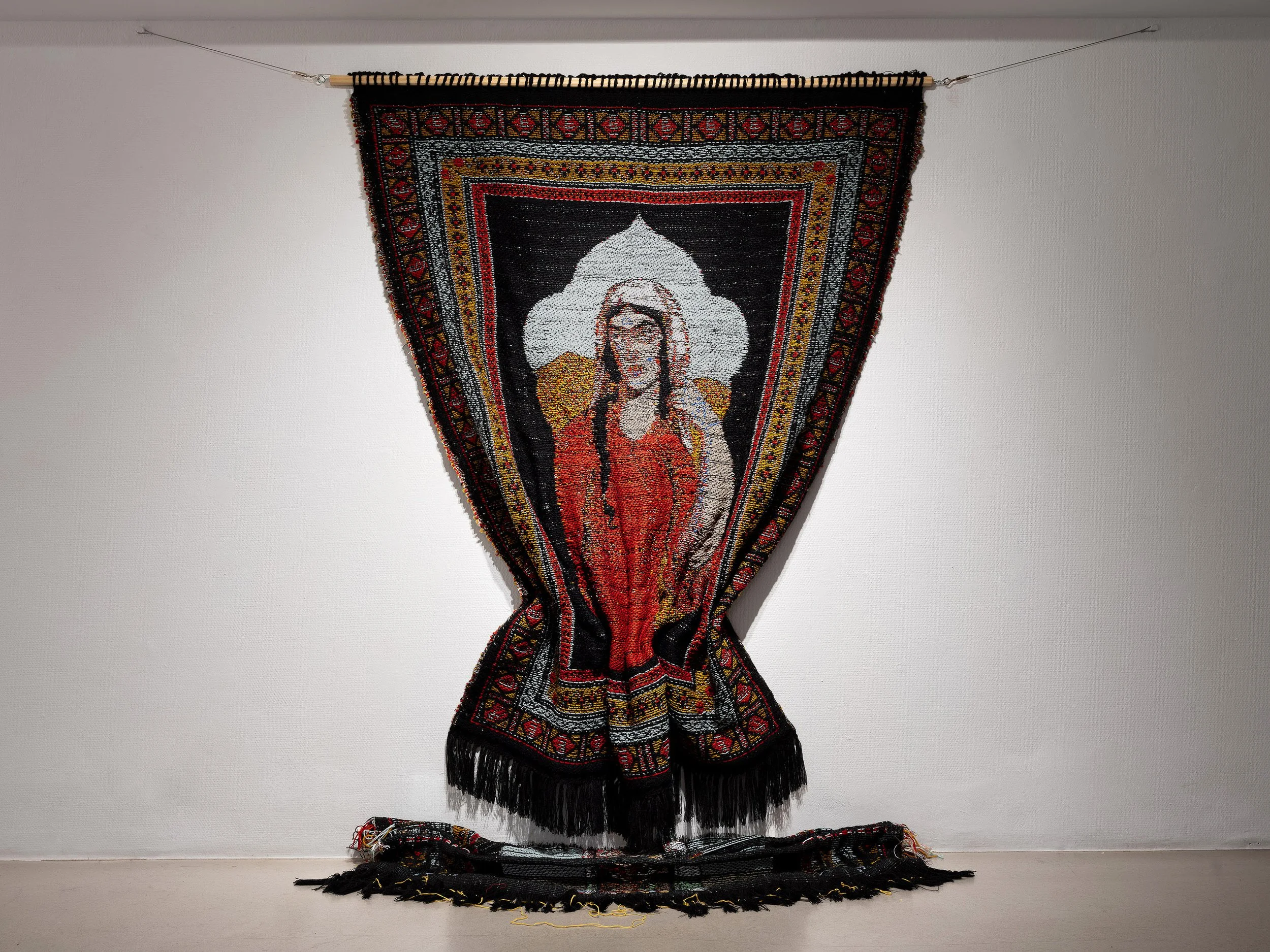
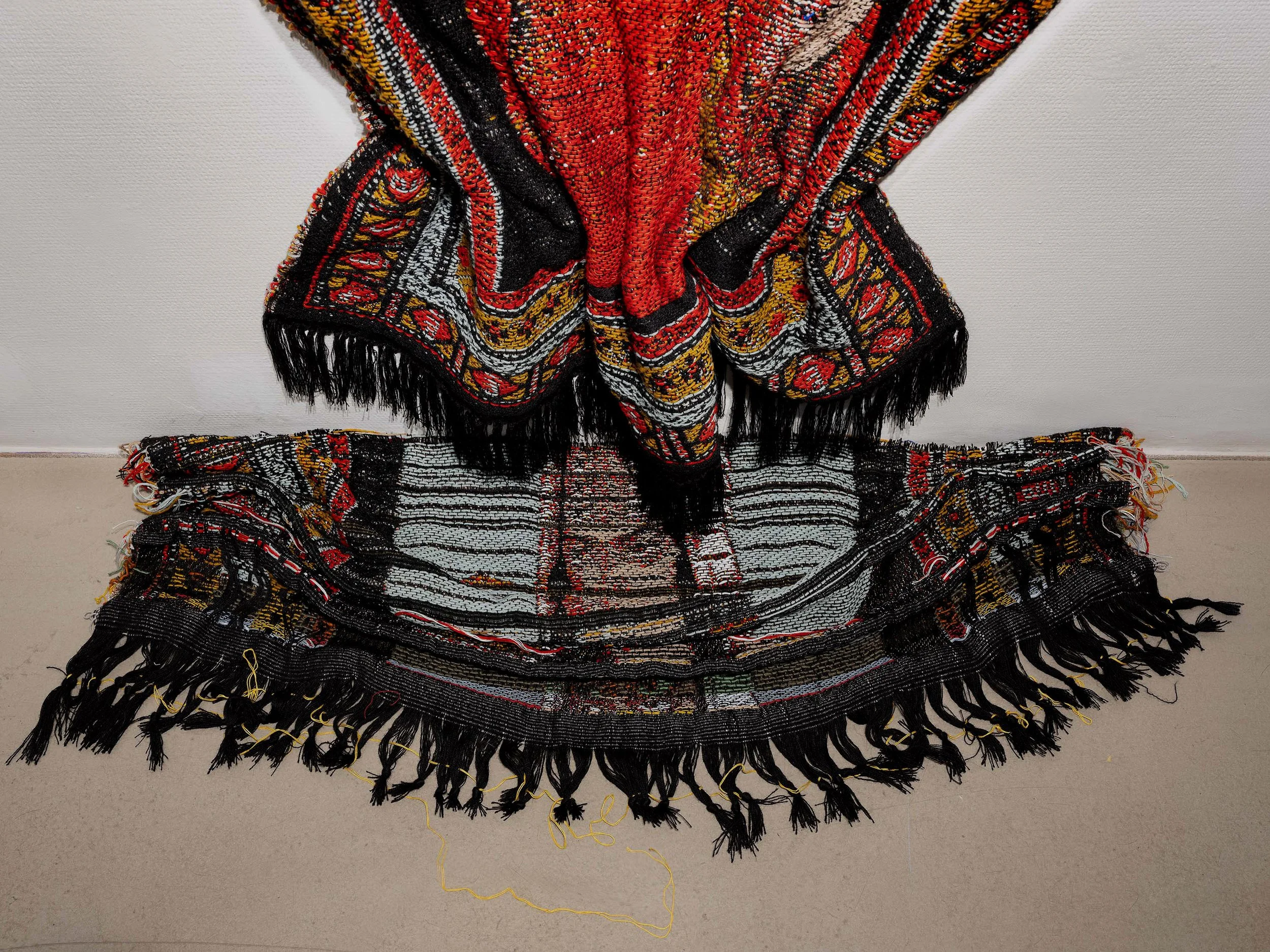
Ancestral Hunting Carpet, 2025
210 x 150 cm
Double weave, embroidery, and wool
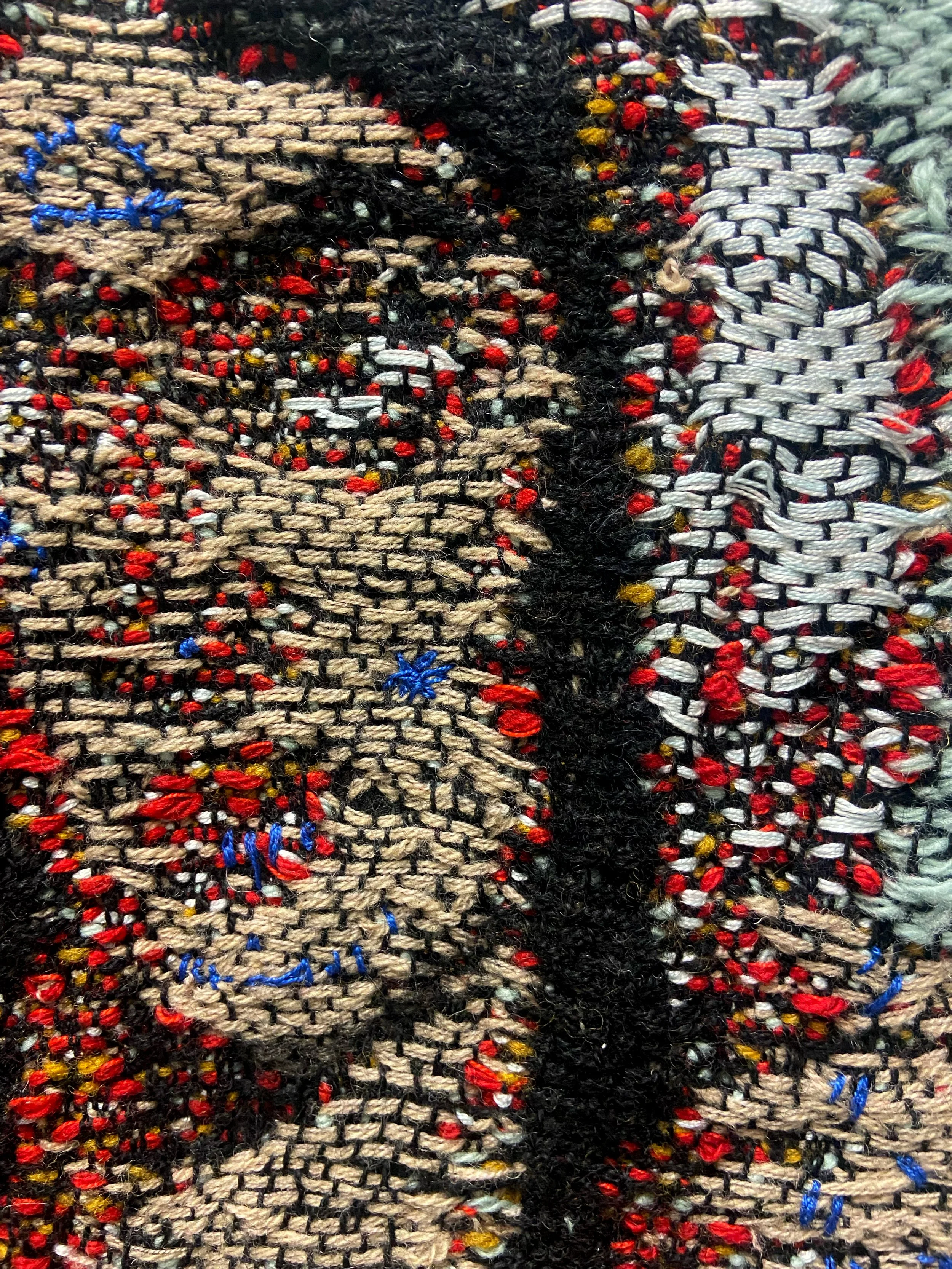
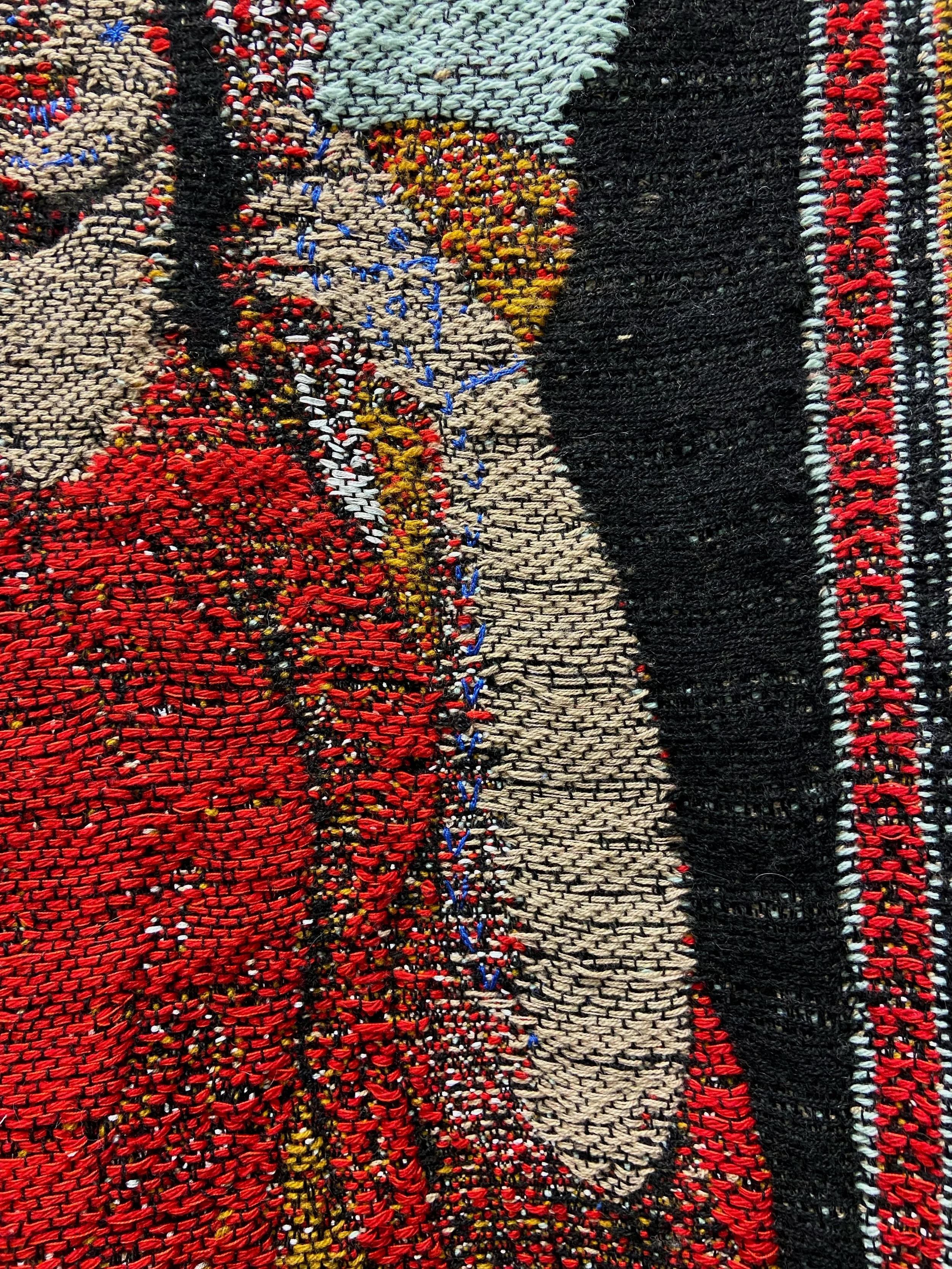
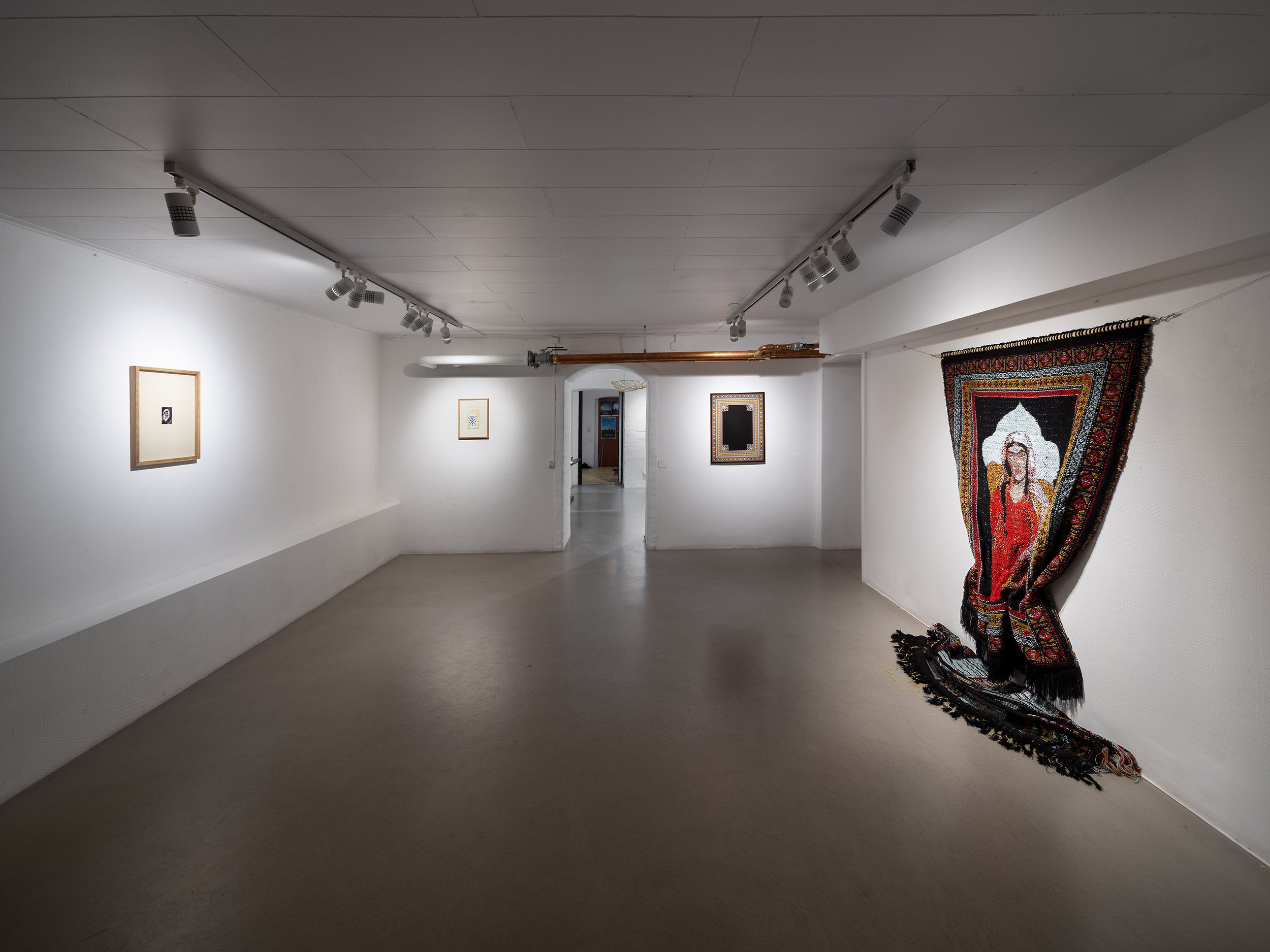
From the solo exhibition “Decolonizing Lines” at Gallery KC, Göteborg 2025. images by Hendrik Zeitler
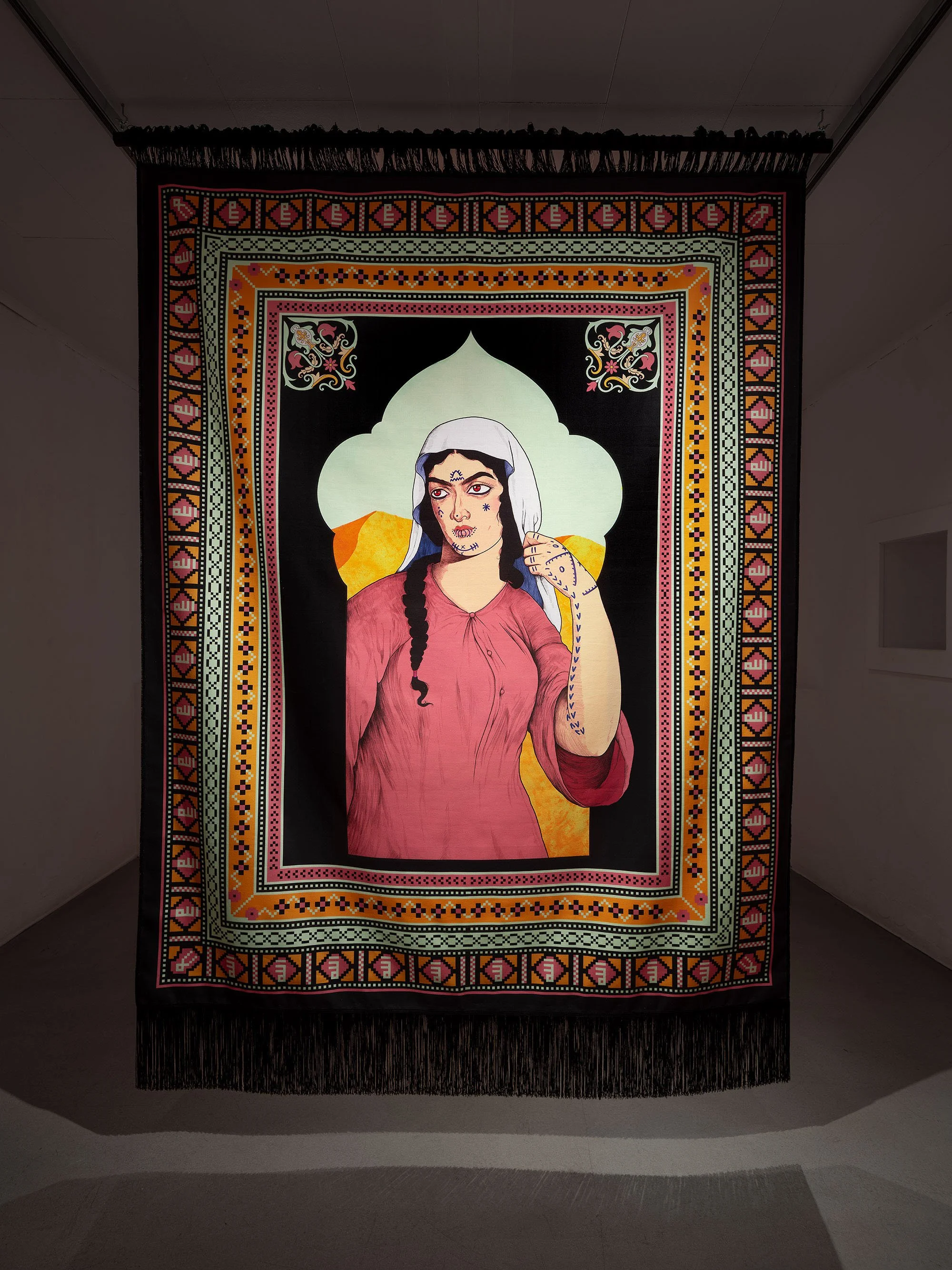
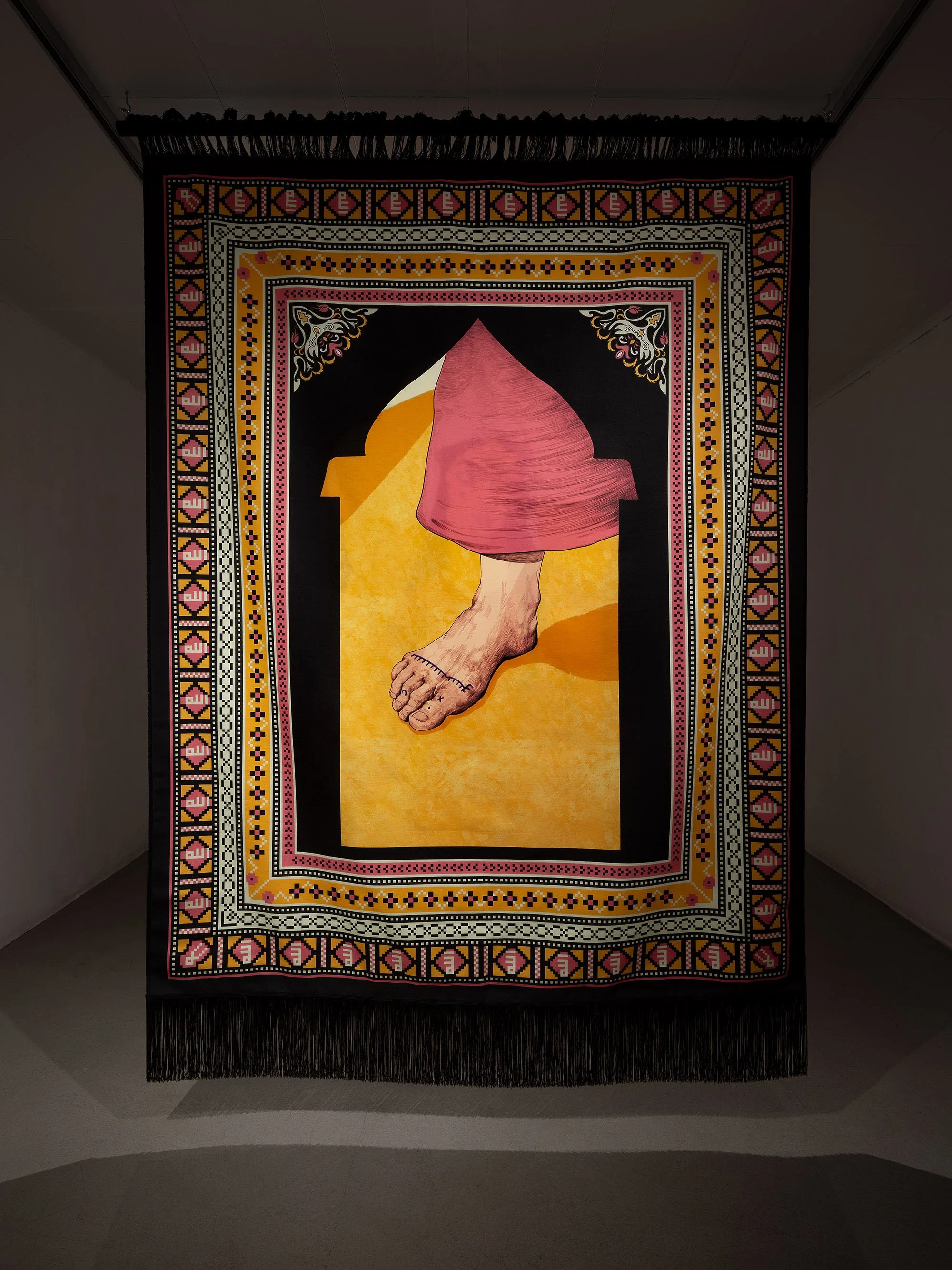
Great-grandmother’s Tattoos (back and front), 2025
230 x 150 cm
Double-sided carpet, digital illustration printed on cotton, hand-sewn, with viscose fringes
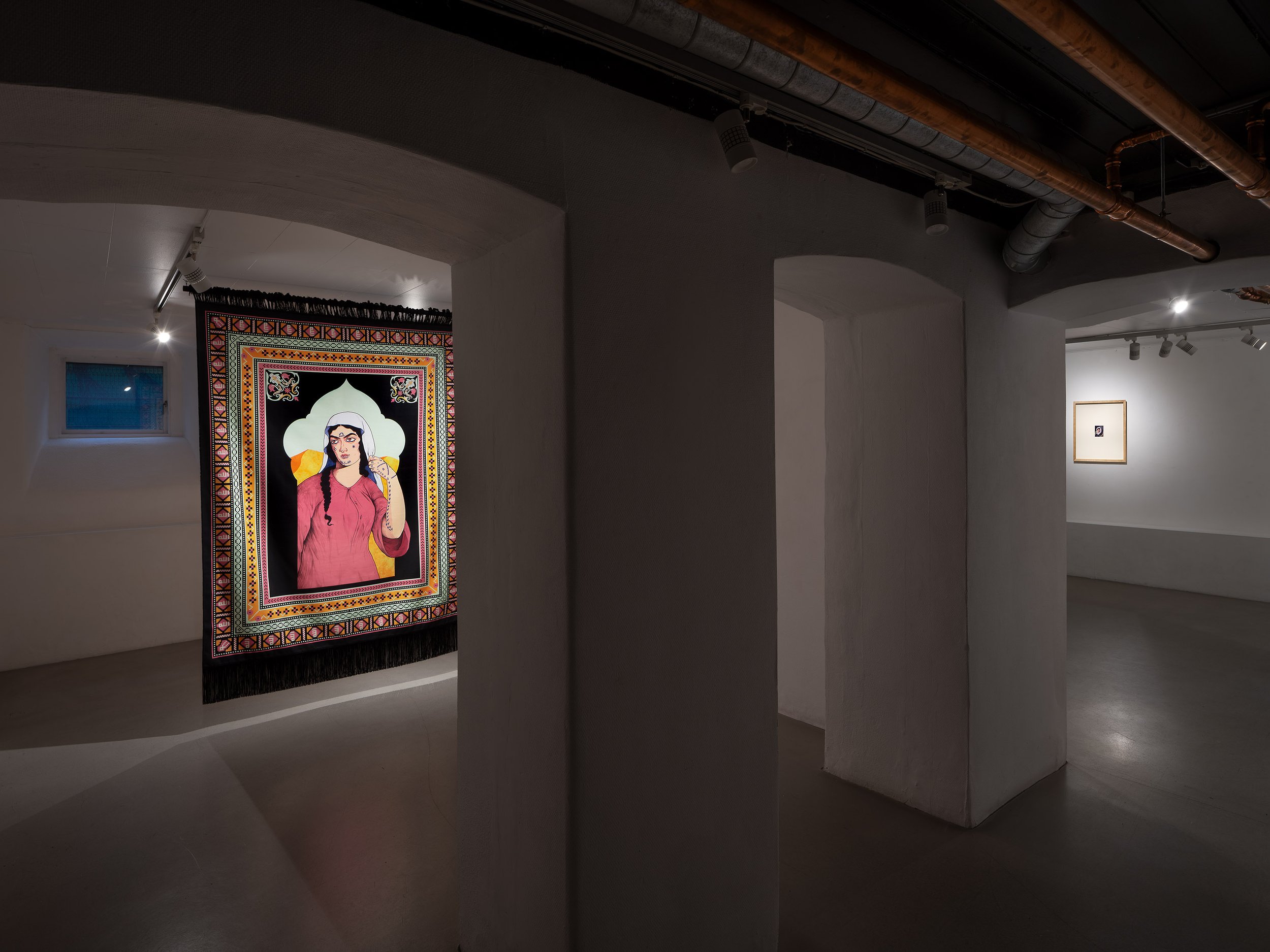
From the solo exhibition “Decolonizing Lines” at Gallery KC, Göteborg 2025. images by Hendrik Zeitler